Mandala Art: A Timeless Guide to Geometric Harmony
In a world saturated with digital noise and chaotic imagery, there is a profound desire for balance, order, and spiritual connection. This is where Mandala Art emerges as a powerful visual language. Derived from the Sanskrit word meaning "circle," mandalas are not merely decorative patterns; they are complex geometric compositions that represent the universe, wholeness, and the integration of the self. Whether you are a graphic designer seeking a unique asset for a business card or an artist looking to incorporate Zen art design principles into your work, understanding the depth of this circular geometry offers endless possibilities.
The Essence of Circular Geometry
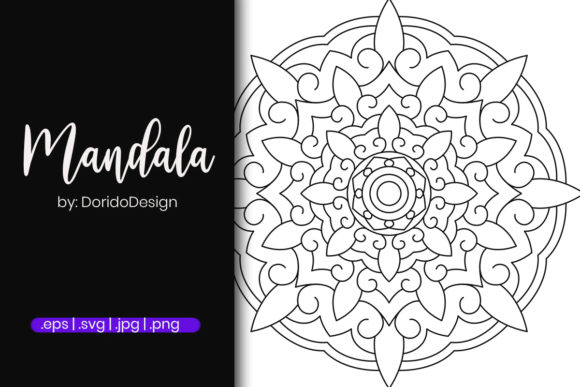
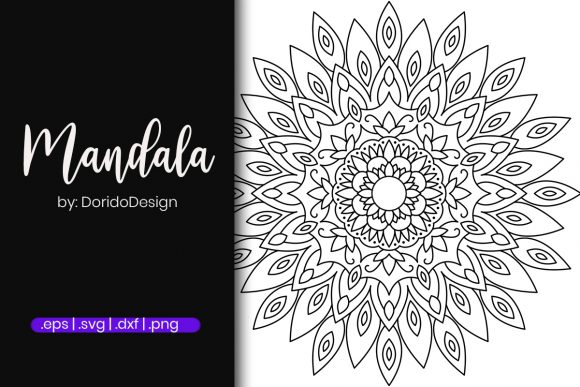
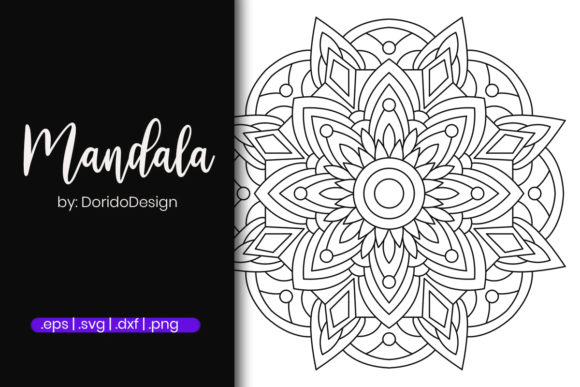
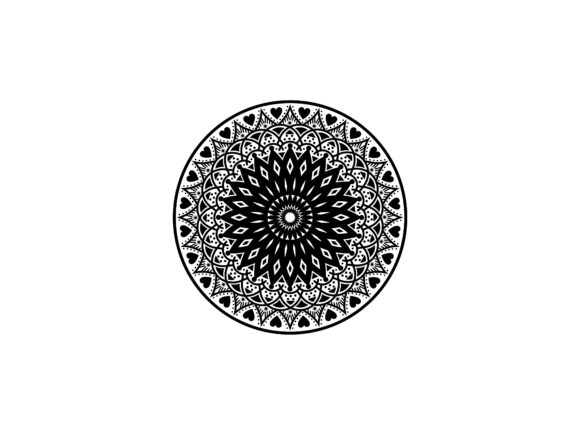
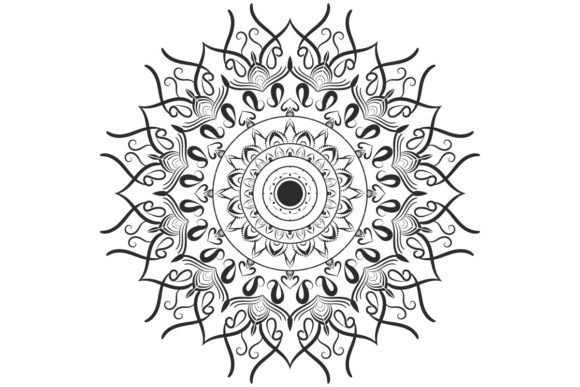
At its core, Mandala Art is defined by its symmetry and concentric structure. It begins with a central point and radiates outward in balanced layers, creating a sense of infinite expansion and stability. This hand drawing round geometry ornament style has roots deeply embedded in ancient traditions, yet it remains remarkably versatile in modern contexts. The design typically features intricate details that draw the eye inward, fostering a meditative state for the viewer.
When we speak of the specific aesthetic often requested today—decorative round ornament black on white—we are referring to a high-contrast, minimalist approach. This monochromatic palette strips away distraction, allowing the complexity of the lines and shapes to take center stage. The stark difference between the black ink and the white background enhances the optical illusion of movement, making the static image feel alive. This clarity makes it particularly effective for applications like t-shirts, where bold graphics need to stand out against various fabric colors.
Cultural Roots and Artistic Styles
While the concept of the mandala is universal, specific cultural interpretations add rich layers of meaning to the art form. The Arabesque style, prevalent in Islamic art, emphasizes the infinite nature of God through repetitive, flowing vegetal patterns that avoid depicting living forms. Similarly, Indian style mandalas often incorporate vibrant symbolism related to Hinduism and Buddhism, representing deities, chakras, and cosmic diagrams.
For those exploring Islam, Arabic, Indian style designs, the focus is often on mathematical precision and spiritual devotion. These patterns are not random; they are calculated arrangements of geometry that reflect the order of creation. When combined with Zen art design principles, which value simplicity and the beauty of imperfection, the result is a fusion of Eastern philosophies. The outcome is a design that feels both ancient and contemporary, suitable for a wide range of audiences.
Practical Applications for Creators and Businesses
One of the most significant advantages of Mandala Art is its adaptability. Because the designs are vector-based or available in multiple formats, they can be scaled without losing quality. This flexibility is crucial for professionals who need to use the same artwork across different mediums. For instance, a t-shirt design requires high-resolution graphics that remain crisp when printed on large surfaces, while a business card design demands fine details that do not blur when reduced to a small size.
Consider the scenario of a yoga studio owner launching a new brand. They might choose a black on white mandala for their merchandise to convey purity and focus. The same design can be adapted for their website header, social media profiles, and stationery, creating a cohesive brand identity. The round geometry ornament acts as a visual anchor, instantly communicating themes of wellness, spirituality, and creativity.
Furthermore, the hand drawing aspect adds a human touch that machine-generated patterns often lack. Even when digitized, the slight variations in line weight and texture mimic the organic nature of pen and ink. This authenticity resonates with consumers who value craftsmanship and artisanal quality in their purchases.
Understanding the Technical Deliverables
When acquiring digital assets for Mandala Art projects, it is essential to understand the file formats available. A comprehensive package typically includes a variety of extensions to ensure compatibility across different software and printing methods:
- .AI (Adobe Illustrator): This is the industry standard for vector files. It allows designers to edit paths, change colors, and resize elements infinitely without pixelation. It is the ideal format for professional graphic design workflows.
- .EPS (Encapsulated PostScript): Another robust vector format widely supported by various design programs. It ensures that the artwork remains editable and scalable, making it perfect for large-format printing like banners or posters.
- .DXF (Drawing Exchange Format): Crucial for users working with CNC machines, laser cutters, or 3D printers. This format translates the artistic lines into precise coordinates that manufacturing equipment can read, enabling the physical production of the design on materials like wood, metal, or acrylic.
- .PNG (Portable Network Graphics): A raster format that supports transparency. This is excellent for web design, allowing the mandala to be overlaid on any background color or image seamlessly. It retains high resolution for digital displays.
- .JPG (Joint Photographic Experts Group): A universally compatible image format. While it does not support transparency, it is lightweight and easy to share, making it suitable for email marketing, social media posts, and quick previews.
Having access to all these formats means you are prepared for any project requirement. You can start with the .AI file for editing, export a .PNG for your website, and use the .DXF version to create a physical sign for your storefront. This versatility eliminates the need to purchase separate assets for different stages of a project.
Evaluating Suitability for Your Needs
Before integrating Mandala Art into a project, it is important to evaluate whether the style aligns with your goals. The intricate nature of Arabesque style and Indian style designs can sometimes overwhelm simple layouts if not balanced correctly. If your goal is minimalism, a simplified version of the decorative round ornament might be more appropriate than a highly detailed one.
Additionally, consider the context of usage. In a corporate setting, a mandala might symbolize innovation and holistic thinking, but it should be used subtly. On a product packaging, however, it can serve as a primary focal point. The key is to respect the cultural significance of the design while adapting it to modern commercial needs. Avoid using sacred symbols inappropriately or stripping them of their intended meaning, as this can lead to backlash and misinterpretation.
Another consideration is the technical limitation of printing. While black on white designs look striking digitally, the printing process may require adjustments. Dark backgrounds with white mandalas (negative space) can be challenging to print on certain substrates, potentially requiring special inks or paper treatments. Always consult with your printer regarding the best method for achieving the desired contrast.
Maximizing Value Through Integration
To truly benefit from Mandala Art, think beyond the surface level. Use the design as a tool for storytelling. For example, a wellness brand could explain how the concentric circles represent the journey from chaos to inner peace. A fashion label might highlight the hand drawing round geometry ornament as a nod to traditional craftsmanship in an era of mass production.
By understanding the purpose, features, characteristics, and value of these designs, creators can make informed decisions that enhance their projects. The Zen art design philosophy encourages us to find beauty in simplicity and complexity simultaneously. Whether you are designing a t-shirt, a business card, or a digital interface, the mandala offers a timeless solution that connects the user to something greater than themselves.
In conclusion, Mandala Art is more than just a trend; it is a visual tradition that continues to evolve. With the right knowledge of file formats and application strategies, anyone can harness the power of this geometric harmony. By choosing high-quality assets that offer Ai, EPS, DXF, PNG, and JPG files, you ensure that your creative vision is realized with precision and professionalism. Embrace the circle, explore the geometry, and let the art guide your next project toward success.