Round Mandala Vector for Greeting Card: A Comprehensive Evaluation for Designers and Creators
In the realm of digital design, few elements command as much attention and versatility as the round mandala vector for greeting card. These intricate geometric patterns, often rooted in spiritual and cultural traditions, have evolved into a staple resource for modern creatives. Whether you are a professional graphic designer, a small business owner exploring Print-on-Demand (POD) opportunities, or an individual looking to create personalized stationery, understanding the specific value of this asset is crucial. This evaluation explores what makes this particular design format distinct, how it compares to other artistic styles, and the practical considerations for integrating it into your workflow.
Defining the Asset: What Makes It Distinct?
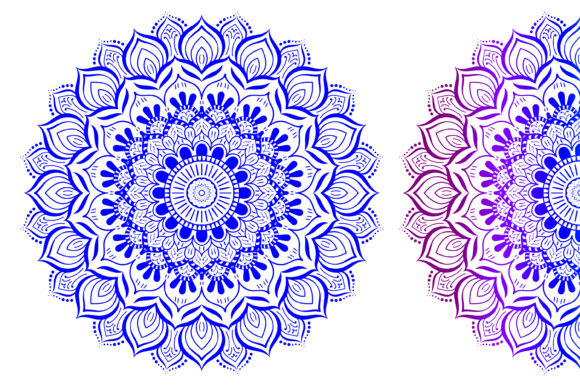
A round mandala vector for greeting card is more than just a decorative image; it is a structured composition that balances symmetry with organic flow. Unlike standard clip art, which may appear flat or rigid, these designs typically feature a complex arrangement of floral motifs, geometric shapes, and ethnic oriental ornaments arranged in a circular formation. The "vector" aspect is the defining technical characteristic. It means the image is constructed using mathematical paths rather than pixels, allowing for infinite scalability without any loss of quality.
The specific utility of this template lies in its multi-format delivery. When acquiring such a resource, users typically receive a comprehensive suite including an AI file for Adobe Illustrator, an SVG for web and scalable applications, a transparent PNG for immediate layering, and a high-resolution JPEG for quick previews. This variety ensures that the round mandala vector for greeting card can be adapted to almost any medium. From the fine lines required for tattoo stencils to the bold printing needed for large posters, the vector foundation guarantees precision.
The aesthetic style is equally significant. Described as an outline doodle hand-drawn vector illustration, it captures the imperfection and charm of human craftsmanship while retaining the clean edges of digital creation. This hybrid approach makes it suitable for diverse applications, ranging from Henna and Mehndi body art patterns to coloring book illustrations. The inclusion of flower elements within the pattern adds a natural, softening touch that appeals to a wide demographic, making it ideal for invitations, thank-you notes, and decorative home goods.
Comparative Analysis: Vector vs. Raster and Other Styles
When evaluating design resources, the choice between vector and raster formats is the first critical decision point. Raster images, such as standard JPEGs or BMPs, are composed of pixels. If you attempt to enlarge a raster image for a large-format print, such as a poster or a banner, the image will become pixelated and blurry. In contrast, a round mandala vector for greeting card maintains crisp lines regardless of size. For designers working on POD stores where products range from small mugs to large wall art, this scalability is not just a convenience; it is a necessity.
Beyond the technical format, one must consider the stylistic comparison between mandalas and other popular design trends. Floral watercolors, for instance, offer a soft, painterly look that is excellent for wedding invitations but lacks the structural integrity required for embroidery or screen printing. Geometric line art offers sharpness but can feel too rigid for certain emotional contexts like sympathy cards or baby showers. The mandala strikes a unique balance. Its repetitive nature creates a sense of harmony and focus, while the hand-drawn outline style introduces warmth and personality.
Another comparison involves pre-made templates versus custom illustrations. While hiring a custom artist provides a unique result, it is time-consuming and expensive. Using a pre-designed round mandala vector for greeting card allows for rapid deployment. However, the tradeoff is that the design is not exclusive; others may use the same base file. To mitigate this, successful creators often modify the vector—adjusting colors, adding text, or combining it with other elements—to create a derivative work that feels original to their brand.
Practical Applications and Use Cases
The versatility of this asset extends across numerous industries. In the world of apparel, the round mandala vector for greeting card serves as an excellent central motif for T-shirts. The circular shape fits naturally on the chest area, and the detailed lines translate well to Direct-to-Garment (DTG) printing or screen printing. Similarly, for drinkware like mugs, the pattern wraps effectively around the cylindrical surface, creating a continuous visual experience.
Stationery and paper goods represent another primary use case. Because the design includes a transparent PNG version, it can be easily placed over various background colors or textures in software like Canva or Photoshop. This flexibility is vital for creating invitation suites where the mandala might frame the text or serve as a watermark. The outline doodle style is particularly effective for coloring books, where the clear lines provide a satisfying activity for adults seeking relaxation through art therapy.
In the niche market of body art, the precision of the vector file is paramount. Artists can scale the round mandala vector for greeting card down to a tiny wrist piece or up to a full back piece, ensuring that the intricate details of the flower and ethnic ornamentation remain visible. This adaptability makes it a valuable tool for tattoo artists preparing stencils and for those offering temporary Henna services.
Evaluating Tradeoffs and Limitations
While the benefits are substantial, a balanced review must acknowledge potential limitations. One consideration is the level of customization required. Although the files are provided in editable formats like AI and SVG, they require proficiency in vector editing software to fully leverage their potential. Users unfamiliar with path manipulation or layer management may find the learning curve steep compared to drag-and-drop website builders.
Another factor is the saturation of the market. Popular mandala designs are widely available, meaning that simply downloading a template and selling it directly without modification is unlikely to yield high returns in a competitive POD environment. Success depends on how well the creator integrates the design into a cohesive product line. For example, pairing the mandala with complementary typography or using it as part of a larger seasonal collection can differentiate the final product.
There is also the issue of color management. While the vector file allows for unlimited recoloring, achieving exact Pantone matches for physical prints requires careful calibration. The RGB values used on screens do not always translate perfectly to CMYK printing processes. Designers must be prepared to adjust color profiles when moving from digital proofing to physical production on items like bags or posters.
Decision Factors: Is This the Right Choice for You?
Determining whether to utilize a round mandala vector for greeting card depends largely on your specific goals and technical capabilities. If your objective is to launch a POD store quickly with minimal upfront investment, this resource offers an efficient starting point. The inclusion of multiple file types (AI, SVG, PNG, JPEG) covers most operational bases, reducing the need to source additional assets.
However, if your project demands absolute uniqueness or highly specialized branding, a generic mandala might feel too broad. In such cases, investing in a bespoke commission or learning to draw custom vectors might be a better long-term strategy. Additionally, if you lack access to professional design software, the raw vector files may sit unused unless you are willing to invest time in learning the tools or using simplified alternatives.
For those focused on bulk production, the efficiency of the vector format shines. Creating variations of a single design for different product sizes is instantaneous. Furthermore, the ability to contact the provider for bulk T-shirt creation support suggests that this resource is tailored for commercial scalability. This makes it an attractive option for entrepreneurs who plan to expand their inventory rapidly.
Navigating the Creative Landscape
The decision to use a round mandala vector for greeting card ultimately rests on the intersection of aesthetic preference, technical skill, and business strategy. It represents a bridge between traditional artistic forms and modern digital commerce. By understanding its strengths in scalability and its limitations regarding exclusivity, creators can make informed choices that align with their vision.
Whether applied to a delicate invitation, a rugged tote bag, or a personal tattoo stencil, the design's inherent symmetry and floral elegance provide a strong foundation for creative expression. As the market continues to evolve, the ability to adapt high-quality vector assets remains a key competency for anyone looking to produce professional-grade materials efficiently. By carefully evaluating the fit between this template and your specific needs, you can ensure that the final output meets both your artistic standards and your practical requirements.