Side View Pontoon Boat Seamless Pattern
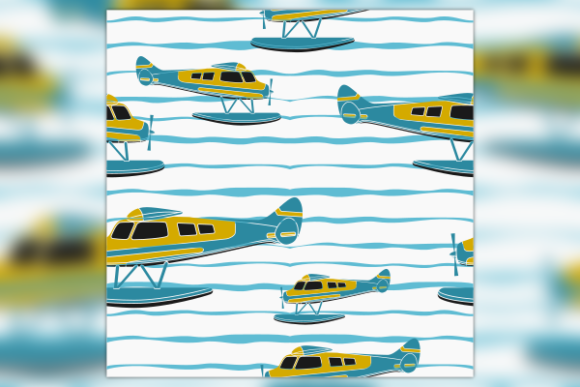
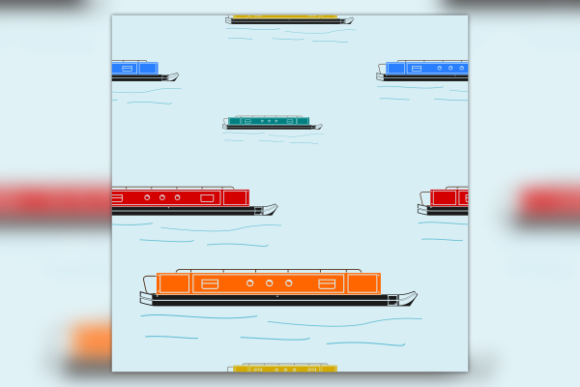
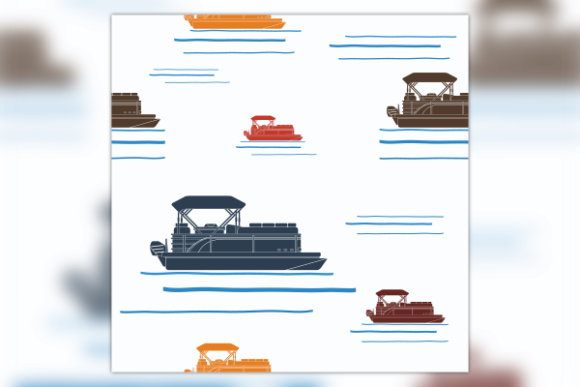
The Side View Pontoon Boat Seamless Pattern represents a specific category of digital vector assets designed for repetitive background applications. At its core, this asset is a flat-style illustration depicting a pontoon boat viewed from the side, floating on calm water. The design features various color variations that repeat without visible seams, creating an infinite tileable surface. This type of graphic resource is distinct from single-image illustrations because it is engineered to cover large areas uniformly, making it a functional tool rather than just a decorative element.
For designers and creators evaluating this asset, understanding the technical structure and potential applications is crucial before integrating it into a project. The pattern is provided in editable SVG format, which implies a high degree of flexibility. Users can manipulate individual elements within the vector file using software such as Inkscape, allowing for customization of colors, sizes, and layout configurations. Additionally, the inclusion of EPS, PDF, and high-resolution PNG files ensures compatibility across various workflows, from print production to web development.
Evaluating the Utility of Vector-Based Patterns
When considering the use of the Side View Pontoon Boat Seamless Pattern, the primary advantage lies in scalability. Unlike raster images (such as standard JPEGs or low-resolution PNGs) that become pixelated when enlarged, vector-based patterns maintain crisp edges at any size. This characteristic is essential for projects requiring different output dimensions, ranging from small business cards to large-scale fabric rolls.
The flat style of the illustration offers a modern aesthetic that aligns well with contemporary design trends. By removing complex shading and realistic textures, the design remains clean and legible even when reduced to small sizes. This makes it particularly effective for user interface elements, icons, or text-heavy backgrounds where visual clutter must be minimized. The "calm water" motif adds a sense of tranquility, which can be leveraged to evoke feelings of relaxation and leisure associated with boating.
Primary Applications and Use Cases
The versatility of this seamless pattern allows it to serve multiple functions across different industries. Below are the most common scenarios where this asset proves valuable:
- Fabric and Textile Design: The seamless nature of the pattern makes it ideal for printing on fabrics. It can be used for summer apparel, swimwear, or home decor items like curtains and upholstery. The ability to edit the colors in Inkscape allows manufacturers to match specific brand palettes or seasonal trends without needing to recreate the artwork.
- Stationery and Invitations: For events related to travel, summer parties, or nautical themes, this pattern serves as an excellent background for invitations, thank-you cards, and place settings. The high-resolution PNG version ensures that printed materials remain sharp and professional.
- Mercandise and Merchandising: Creators looking to produce t-shirts, tote bags, stickers, or mugs often require scalable graphics. The vector format ensures that the logo or design looks consistent whether printed on a small sticker or a large banner.
- Digital Backgrounds: Web designers can utilize the pattern as a subtle background for websites related to transportation, recreation, or tourism. Because the pattern repeats seamlessly, it can fill entire screen widths without awkward breaks or visible grid lines.
Technical Considerations and Workflow Integration
Selecting the right tools is a critical step in utilizing this asset effectively. While the pattern comes with pre-rendered formats, the inclusion of the SVG (Scalable Vector Graphics) file is the most significant feature for advanced users. To fully leverage the editable nature of the file, the recommendation to use Inkscape is practical and widely supported.
Inkscape is a free, open-source vector graphics editor that provides robust tools for manipulating SVG files. When working with the Side View Pontoon Boat Seamless Pattern in Inkscape, users can isolate specific components, such as the boat hull, the water ripples, or the color blocks. This granular control allows for:
- Color Customization: Changing the color scheme to match a specific brand identity or personal preference without losing image quality.
- Layout Adjustment: Modifying the spacing between boats to create a denser or more sparse pattern depending on the intended density of the final product.
- Element Removal: Deleting specific parts of the illustration if they do not fit the desired composition, leaving only the water or the boat silhouette.
For those who do not have access to vector editing software, the provided PNG files offer a convenient alternative. These high-resolution raster versions are ready to use immediately in photo editing software like Adobe Photoshop or Canva. However, users should be aware that these files cannot be scaled beyond their original resolution without potential loss of quality.
Weighing Benefits Against Tradeoffs
While the Side View Pontoon Boat Seamless Pattern offers significant advantages, a balanced evaluation requires acknowledging potential limitations and tradeoffs. Understanding these factors helps determine if the asset aligns with specific project goals.
Design Consistency: One benefit of the flat style is consistency, but it may lack the depth required for hyper-realistic designs. If a project demands a photorealistic depiction of a boat with complex lighting and reflections, this vector pattern may feel too stylized or simplistic. In such cases, a custom photograph or a detailed 3D render might be a better fit.
File Management: Working with vector files requires a certain level of technical proficiency. While Inkscape is powerful, it has a steeper learning curve compared to basic image editors. Users unfamiliar with vector concepts like paths, layers, and nodes may find the editing process challenging initially. Additionally, the ZIP archive containing multiple formats (EPS, PDF, SVG, PNG) requires proper organization to ensure the correct file type is selected for each stage of production.
Repetition Artifacts: Although the pattern is designed to be seamless, improper tiling in a design application can sometimes result in visible grid lines or misalignment. It is important to test the pattern at full scale before committing to a large print run or final web deployment to ensure the repetition is invisible.
Determining Fit for Your Project
To decide whether the Side View Pontoon Boat Seamless Pattern is the right choice, consider the following decision-making framework:
If your goal is to create a cohesive background for a large-format print job, such as wallpaper or fabric, the vector capability of this asset is likely a strong fit. The ability to adjust the pattern's density and color via Inkscape provides the necessary control for mass production. Similarly, for digital marketing materials where fast loading times and scalability are priorities, the SVG format offers superior performance.
Conversely, if the project requires a unique, one-off illustration where the boat is the focal point rather than part of a repeating texture, a standalone image would be more appropriate. Furthermore, if the design direction requires a highly textured, vintage, or hand-drawn look, the clean lines of this flat-style vector may clash with the desired aesthetic. In these situations, seeking out hand-painted textures or photographic elements might yield better results.
Conclusion
The Side View Pontoon Boat Seamless Pattern is a versatile and practical resource for designers working in the realms of transportation, recreation, and lifestyle branding. Its combination of flat aesthetics, seamless tiling, and editable vector formats makes it suitable for a wide array of applications, from textile design to digital invitations. By leveraging the included formats and utilizing software like Inkscape, creators can adapt the asset to meet specific needs while maintaining high visual standards. Ultimately, its value depends on the requirement for scalability and the desired stylistic tone of the final output.