The Art and Utility of Christmas Wreaths: A Guide to Traditional Decorations
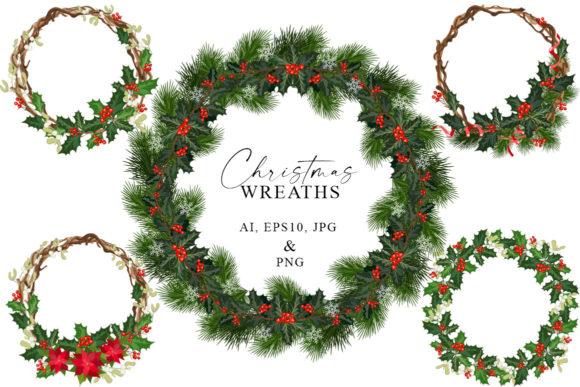
Christmas wreaths have long served as the cornerstone of holiday entryways, representing a timeless symbol of welcome and seasonal cheer. At their core, these circular arrangements are more than mere decorations; they are curated compositions that blend natural textures with festive colors to create an immediate sense of warmth. The classic design typically features a base of evergreen fir branches, chosen for their enduring green color and needle-like texture that mimics nature's resilience during winter. This foundation is often accented with sprigs of holly, providing sharp contrast through deep red berries and glossy leaves, while ribbons are tied into bows to add softness and movement.
However, the modern landscape of holiday decorating has expanded far beyond the physical limitations of a single front door. For homeowners, crafters, and small business owners, the concept of the Christmas wreath has evolved into a versatile digital asset category. Today, we must evaluate not only the traditional physical object but also the high-quality digital representations that allow these designs to be replicated across various mediums. Whether you are looking to print a greeting card, design a custom t-shirt, or create a large-scale banner, understanding the distinction between buying a physical wreath and acquiring digital assets is crucial for making an informed decision.
Digital Assets vs. Physical Decorations
When researching options for holiday projects, the primary comparison lies between purchasing a ready-made physical wreath and utilizing digital vector files and high-resolution images. A physical Christmas wreath made of real fir, holly, and ribbon offers an undeniable sensory experience. It provides fragrance, tactile depth, and a three-dimensional presence that cannot be fully captured by a screen. However, this option comes with significant constraints regarding longevity and versatility. Real wreaths dry out over time, shed needles, and require maintenance. They are strictly limited to hanging on doors, walls, or mantels.
In contrast, digital collections containing editable EPS10 and AI vector files offer a level of flexibility that physical objects simply cannot match. These resources typically include multiple variations of the same design, allowing users to manipulate scale, color, and composition without losing quality. For instance, a collection featuring four distinct EPS10 files and four AI vector files allows a designer to isolate specific elements—such as the ribbon bow or the holly clusters—and rearrange them to fit unique branding needs. This is particularly valuable for businesses creating custom merchandise or marketing materials where consistency in brand identity is paramount.
The inclusion of 4000×4000 RGB JPG images further bridges the gap between digital design and realistic visualization. These high-resolution photographs provide photorealistic references for sublimation printing or large-format banners. When combined with PNG files featuring transparent backgrounds, the utility expands even further. Users can layer these wreath images over any background color or pattern, removing the need for complex cropping or masking. This capability transforms a static image into a dynamic component of a larger graphic project.
Evaluating Use Cases and Applications
To determine if a digital wreath collection is the right choice for your needs, it is essential to analyze specific use cases. The most common application for these assets is sublimation printing. Sublimation involves transferring dye onto materials like polyester fabrics, mugs, and phone cases using heat. Because the process requires high-resolution raster images (like the included 4000×4000 JPGs) or scalable vectors (the EPS and AI files), having a comprehensive pack ensures that the final product remains crisp regardless of the item size. A low-resolution image would result in pixelation on a large mug, whereas a vector file guarantees smooth edges at any dimension.
Crafting enthusiasts also find immense value in these digital downloads. Those who engage in paper crafting, scrapbooking, or creating DIY holiday cards can utilize the PNG files with transparent backgrounds to easily place wreath graphics onto layered projects. Unlike cutting out a physical paper shape, which can be tedious and prone to error, importing a pre-cut PNG allows for precise placement and instant editing. Furthermore, the ability to edit the vector files means a crafter can change the color of the ribbon from red to gold or blue to match a specific theme without needing to source new physical materials.
For commercial decorators and event planners, the tradeoff between cost and customization becomes a central factor. Buying a physical wreath is a one-time expense that yields a single result. Purchasing a digital art pack is an investment that yields unlimited reproductions. If a decorator needs to create 50 identical signs for a corporate party, a digital file is the only viable option. The ability to scale the artwork up to billboard size or down to a tiny icon without degradation makes digital assets indispensable for professional applications.
Understanding the Technical Specifications
When evaluating digital products, technical specifications play a critical role in determining compatibility with your existing software and hardware. The mention of EPS10 and AI formats indicates that these files are compatible with industry-standard vector graphics editors such as Adobe Illustrator and CorelDRAW. The "EPS10" designation specifically refers to Encapsulated PostScript version 10, a standard that ensures broad compatibility with older versions of design software while maintaining advanced features like transparency and layers. This is vital for professionals who may need to open files on different machines or share them with clients using varied software versions.
The resolution of the accompanying JPG files is another key metric. A 4000×4000 pixel image at standard print resolution (300 DPI) is sufficient for high-quality prints up to approximately 13x13 inches. For larger formats, the vector files become the primary resource. Understanding the difference between RGB and CMYK color modes is also important. The provided JPGs are in RGB, which is optimized for screens and web use. If the goal is professional offset printing, users may need to convert these colors to CMYK to ensure accuracy, though many modern workflows handle this conversion seamlessly. The inclusion of both vector and raster formats covers the spectrum from screen-based digital marketing to tangible printed goods.
Comparing Alternatives in the Market
While digital wreath packs offer significant advantages, they are not the only solution available. Some users might opt for free stock images found online. While tempting, free resources often come with limitations regarding resolution, licensing restrictions, and lack of editability. Many free images are locked at lower resolutions, making them unsuitable for professional printing. Additionally, free vectors often contain complex paths or non-editable effects that hinder customization. Paid digital art collections, by contrast, usually guarantee commercial licenses, higher quality standards, and fully editable layers.
Another alternative is hiring a graphic designer to create a custom wreath from scratch. This approach offers total creative control but comes with a much higher price tag and longer turnaround time. For standard projects requiring a classic look with fir, holly, and ribbons, a pre-designed collection is often the most efficient path. It provides a polished, professional aesthetic immediately, saving hours of design time. The decision ultimately rests on the balance between budget, timeline, and the need for unique customization.
Making the Right Choice for Your Project
Selecting the appropriate resource depends heavily on the intended outcome. If the goal is simply to hang a decoration on a front door for personal enjoyment, a physical wreath is the superior choice. The organic beauty of real fir branches and the scent of pine create an atmosphere that digital files cannot replicate. In this scenario, the tradeoff favors the physical object for its emotional impact and sensory appeal.
Conversely, if the objective involves production, replication, or integration into a larger design system, digital assets are clearly the better option. The ability to manipulate the design, change colors, and scale the image without loss of quality makes these files ideal for entrepreneurs and designers. The inclusion of transparent PNGs and editable vectors empowers users to adapt the Christmas wreath motif to almost any context, from website headers to packaging labels.
It is also worth considering the versatility of the specific components mentioned: fir branches, holly, and ribbons. These elements represent the quintessential Christmas palette. By having them isolated in digital files, users gain the freedom to experiment. One might choose to remove the holly for a more minimalist look or swap the ribbon color to match a winter wonderland theme. This level of control is impossible with a pre-assembled physical wreath, which locks the user into a fixed composition.
Ultimately, the decision boils down to function. Are you seeking a singular, tangible piece of decor, or do you need a flexible tool for creation? For those engaged in crafts, sublimation, printing, and digital decoration, the comprehensive nature of a digital pack containing multiple formats and high-resolution images offers unmatched utility. It serves as a foundational resource that can be reused year after year, adapting to changing trends and project requirements without the waste associated with disposable physical items.
By carefully weighing the strengths of digital flexibility against the charm of physical tradition, consumers can make choices that best serve their specific needs. Whether you are designing a holiday campaign or simply preparing your home for the season, understanding the capabilities of these resources ensures that the final result meets your expectations for quality and style.